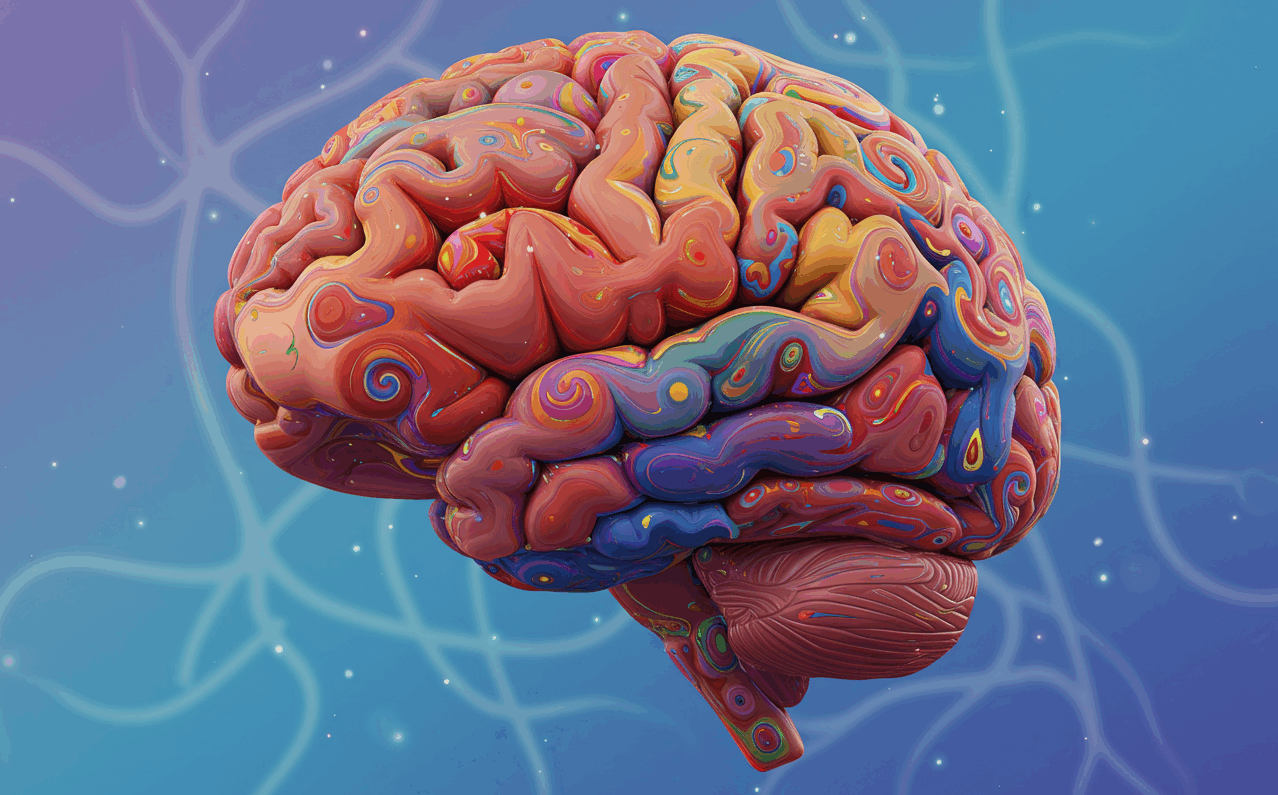
A quick note before we dive in: this post focuses specifically on the ADHD brain. Autism involves its own distinct neurology, and the two overlap in ways that deserve their own post entirely. If you’re AuDHD like me, some of this will resonate, some won’t, and that’s exactly why the combined diagnosis is so complicated.
Let me tell you about a Ferrari.
A Ferrari that keeps stalling at red lights isn’t a slow car. It isn’t broken. It isn’t less of a car than the sedan next to it. It just needs the right fuel, the right conditions, and ideally a mechanic who understands what they’re actually working with.
A lot of people with ADHD get handed a report, or a diagnosis, or an article explaining the neuroscience, and what they hear is: parts of my brain are smaller. Parts of my brain are less developed. And their brain, being the pattern-recognition machine it is, immediately connects those dots straight to: I’m not that smart.
I want to stop that thought right here, before we go any further.
The neuroscience of ADHD describes how your brain is wired differently. It says absolutely nothing about how intelligent you are. Those are two completely separate things, and by the end of this post, I want you to understand why.
What the Science Actually Says
ADHD isn’t one thing in one place in your brain. It’s a whole network working differently, and understanding which parts are involved actually explains a lot about why you experience what you experience.
The prefrontal cortex is responsible for planning, decision-making, impulse control, and keeping your goals in mind while you work toward them. In ADHD it develops more slowly and tends to be slightly smaller on average. This is the region behind the “I know I should do the thing, so why am I not doing the thing” experience. It’s not a character flaw. It’s a structure that has been working harder than average to do what other people’s brains do automatically.
The reward circuits respond less strongly to future rewards. This is the neurology behind what I call the ADHD tax: it’s not that you don’t care about long-term consequences, it’s that your brain literally registers future rewards as less urgent than immediate ones. The deadline that’s three weeks away barely registers until it’s three hours away, and suddenly you can do in three hours what someone else needed three weeks to do.
The default mode network is the system that’s supposed to quiet down when you focus on a task. In ADHD brains, it doesn’t reliably do that. It keeps running in the background. This is why focus can feel like fighting your own brain rather than simply directing it. It’s not distraction. It’s a network that never fully got the memo to stand down.
And at the center of all of this are dopamine and norepinephrine, the signal carriers that help your prefrontal cortex hold information steady, filter out noise, and keep useful input from getting drowned out. In ADHD, those signals are less consistent. The right information fades. The wrong input gets through. It’s a signal-to-noise problem, not a processing power problem.
Smaller Doesn’t Mean Less
Here is the thing about those brain imaging studies: they describe averages across populations, with small differences measured in groups. They are not a scan of your individual brain predicting your individual ceiling.
And here is the thing about IQ and ADHD: they are genuinely independent variables. High intelligence and ADHD coexist all the time, in a lot of people. I know this personally, and I know plenty of brilliant people with ADHD whose cognitive abilities are extraordinary by any measure.
In fact, there’s a well-documented clinical phenomenon where high intelligence masks ADHD in assessments. The brain compensates. It finds workarounds. It develops strategies that make the person look fine from the outside, right up until the demands of life exceed the workarounds, and suddenly nothing works anymore.
Sound familiar?
The people who go undiagnosed until their forties and fifties often got there partly because they were smart enough to pass. Their intelligence covered the gap, until it couldn’t anymore. That’s not evidence of a lesser brain. That’s evidence of an extraordinary brain running a very demanding background process for decades with no support.
You were doing something neurologically harder than your peers your entire life, and you kept up anyway. That’s not a small thing.
The Same Brain, the Other Side
Here is what the signal-to-noise framing also explains: hyperfocus.
When something genuinely engages the reward circuit, the same brain that couldn’t drag itself to the spreadsheet will lock onto a problem for six hours without noticing time passes. The same wiring that makes routine tasks feel impossible makes genuine interest feel like a superpower.
The pattern recognition that feels like a curse in noisy environments is the same pattern recognition that spots what everyone else missed. The sensitivity to stimulation that makes open-plan offices unbearable is the same sensitivity that makes creative connections faster and empathy deeper.
And then there’s autism, which I’m not covering fully here, but I’ll say this: savant abilities, the kind that produce extraordinary mathematical, musical, or artistic capacity, emerge from the same neurology that produces the differences clinicians measure in assessments. The same brain. That alone should tell you something about what “different” does and doesn’t mean.
What Medication Actually Does
If the problem is signal-to-noise, medication is essentially a volume knob.
ADHD medications work by increasing the availability of dopamine and norepinephrine, either by slowing how quickly they’re reabsorbed, by boosting how much is released, or by directly activating the relevant receptors. The goal isn’t to give you a different brain. It’s to give the brain you already have enough signal to do what it was always capable of doing.
Stimulants like methylphenidate and amphetamine-based medications are the most commonly prescribed. Non-stimulant options like atomoxetine target norepinephrine reuptake and have a lower potential for misuse. Newer options are being developed that affect multiple neurotransmitter systems at once, which may also help with mood and anxiety symptoms that often come along for the ride.
None of this is fixing something broken. It’s giving a Ferrari the right fuel.
As always: talk to a qualified clinician about what’s right for you. This is information, not medical advice.
You were always running the marathon. You were just doing it in the wrong shoes. Now you know what shoes you need. That changes everything.