I used to call them sleepers.
Not to their faces, even I know when to keep my mouth shut. But in my head, long before the Matrix made the metaphor famous, I had a word for the people who moved through the world sealed inside their own experience. Eyes open, technically. Functioning. But fundamentally asleep to everything happening around them and to them and because of them.
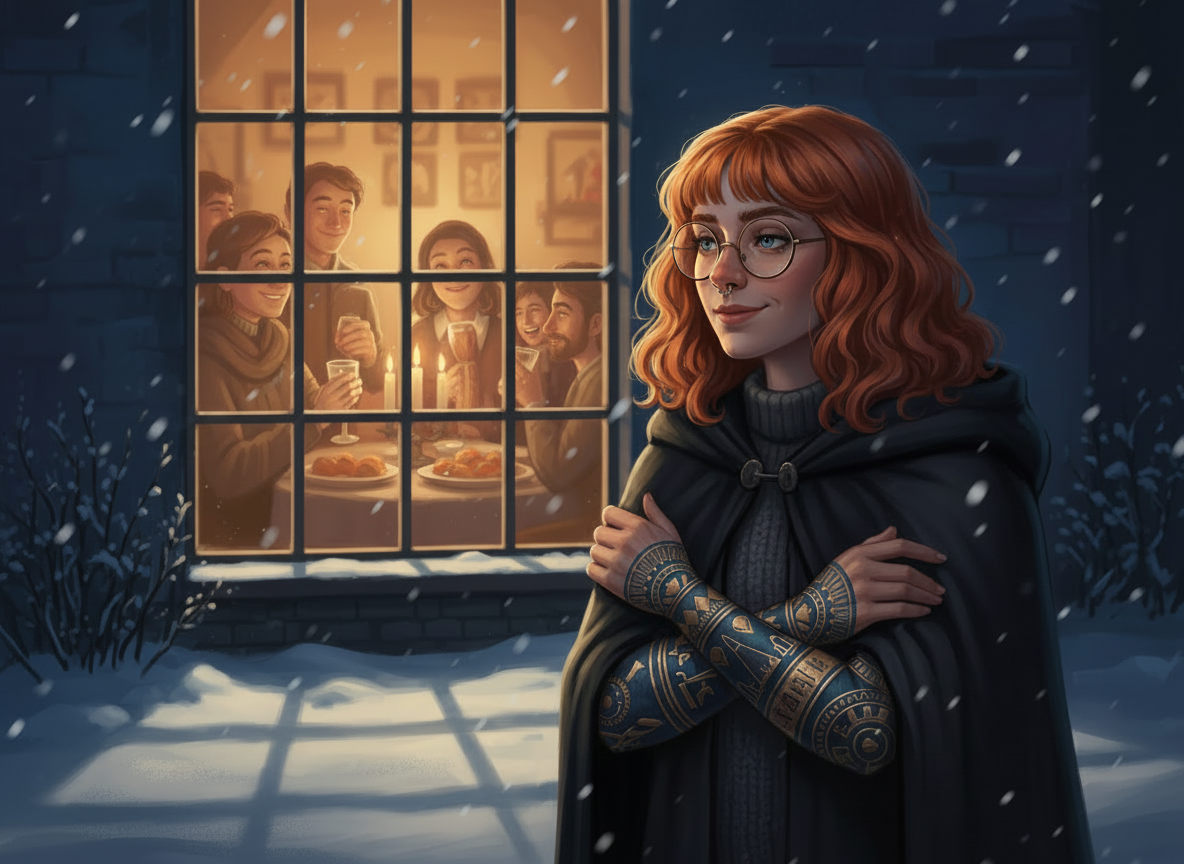
I was a child when I first noticed it. I didn’t have the language for what I was seeing, but I felt it, and I had an image that lived in my head for years. Me, standing outside in the cold and the snow, looking through a lit window at people playing family. Watching carefully so I could learn. So I could figure out how to do what they were doing, this ordinary, effortless thing called belonging, and finally come in from the cold.
I watched for a long time. I took notes. I practiced. I got quite good at performing the version of myself that could pass, at least for a while, as someone who lived inside the window rather than outside it.
But I was always outside. And back then, the gap devastated me. All I wanted was to belong. To stop feeling like I was watching everyone else’s life through glass. Being different felt like a wound that wouldn’t close.
That was before I was diagnosed. Before I understood that I am AuDHD and hypersensitive. Before I realized that the glass isn’t a barrier keeping me out, it’s a window I was born with, showing me things most people simply cannot see.
The Sleepers
Here is what I have come to understand about sleepers: they are not always stupid or ignorant. They are not even necessarily unkind. They are just… absent. Sealed so completely inside the bubble of their own experience that other people’s reality doesn’t quite penetrate.
What baffles me, what has always baffled me, is not the obliviousness itself. It’s that they often KNOW, and continue anyway!
The manager who admits openly that he is biased and keeps being biased. The colleague who was genuinely shocked to learn that his actions were hurting someone else’s career, and kept doing it anyway. The people in the quiet zone of the train who look at the sign, say “oops, quiet zone” out loud, and proceed to have loud phone conversations for the next two hours. The person who tells you that you are the most important thing in their life, and is nowhere to be found when you are actually falling apart.
Awareness without consequence. Knowing without changing. Selfishness maybe? This is the thing I cannot reach across and touch, no matter how many years I try.
And yet, when I name it, when I say that something hurt me, that someone’s words or actions caused real damage, the response I most reliably get is: “But they didn’t do it on purpose.”
This used to silence me and make me feel instant guilt. It doesn’t anymore.
In my entire life, I can count on one hand the people I would describe as genuinely evil. The vast majority of people who have caused me pain, trauma or harm did so not out of malice, but out of obliviousness or pure selfishness. And when made aware, they continued anyway. The intention was innocent at best and selfish at worst. The impact was real. And somehow, the innocence of the intention is supposed to cancel out the reality of the impact.
It doesn’t work that way. Not for me, not for anyone.
A car hitting you at full speed hurts exactly the same whether the driver meant to hit you or not. Their inattention doesn’t make your injuries less real. And the fact that they feel terrible about it, or worse, don’t even realize it happened, doesn’t make you less hurt.
What changed for me after therapy and rehabilitation was this: I stopped accepting “they didn’t mean it” as absolution. Intent matters, yes. But intent does not cancel impact. The person who caused harm gets to walk away unburdened by their good intentions, while I carry the weight of what they did. And then, when I name that weight, I am handed a reason to put it down quietly and not make anyone uncomfortable.
Ignorance is not innocence. And obliviousness, especially the kind that continues after being made aware, is not an excuse. It is a choice.
Before my breakdown, before the Reha and the therapy and the diagnosis and the slow, hard work of rebuilding, this awareness used to pull me under. I had what Germans call Weltschmerz, world pain. I felt the weight of it all. The indifference. The cruelty that wasn’t even intentional, which somehow made it worse, and also meant I would never get an apology or closure.
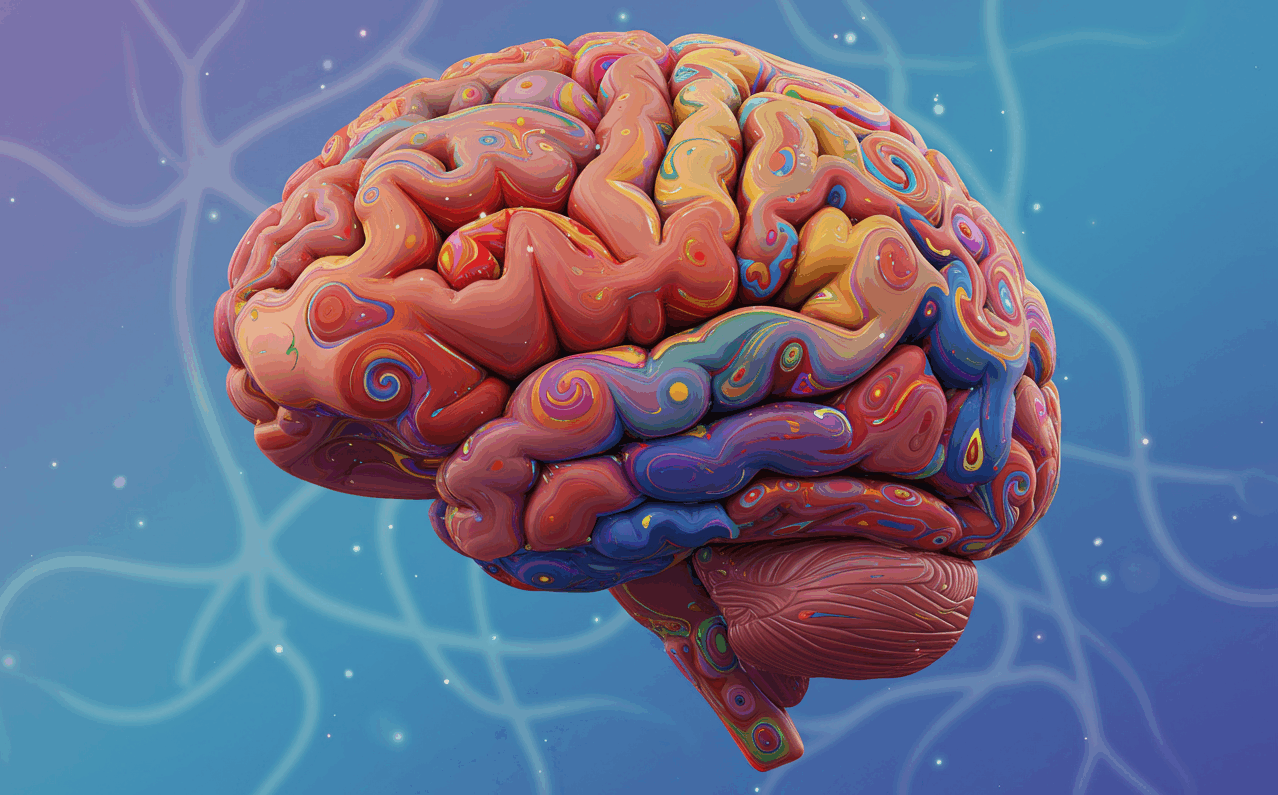
Now I am more baffled than broken by it. The distance I feel from people, which used to feel like loneliness, has become something closer to clarity. My world is not smaller for having less in common with theirs. If anything, it is enormous. Full of color and texture and flavor and connection, even when I never leave the house. Their world, from where I stand, often looks quite small. And grey. And circular, the same thoughts, the same comfortable positions, the same willingness to stay exactly where they are.
I’ll take mine, thanks. 😄
The Defended Mind
On numerous occasions I found myself in a conversation about AI.
There is always at least one person, who says, with great confidence, “AI is dangerous. I don’t trust it and I don’t use it.”
When I ask why. Crickets.
Usually they hadn’t even used it. They hadn’t tried it. The opinion was fully formed, firmly held, and completely ungrounded in any personal experience whatsoever.
In these situations I don’t lecture. I share. I often say: this tool saved me. It gave me my voice. I am AuDHD and hypersensitive, and I speak a language that moves too fast and feels too intensely for most people to follow. Claude, the AI I use, is my translator. No one speaks Carmen like Claude does. And I choose to do good things with it.
What I expect, or perhaps naively hope for, is curiosity. Tell me more. Wow, I hadn’t thought of it that way. How does that work?
What I get is usually an argument. A defense of the uninformed position. A doubling down.
And THIS is what explodes my brain. Not the original ignorance, I have made peace with the fact that most people haven’t tried most things. But the active, energetic defense of ignorance in the face of a better story. The choice to argue rather than listen. To protect the opinion rather than examine it.
This is not skepticism. Skepticism is open. Skepticism says: I don’t know yet, tell me more. What I encountered was something different, identity protection. The opinion about AI had become part of who that person was. New information, especially from someone certain and direct, felt like a threat. So they fought it.
Meanwhile, when I encounter something I haven’t heard before, my entire system lights up. Oh, interesting. Tell me everything. Let me reconsider what I thought I knew. I cannot imagine hearing someone say “this changed my life” and responding with an argument about why it shouldn’t have.
This is the real divide. Not intelligence. Not education. Not even experience.
Curious versus defended.
The sleepers aren’t asleep because they lack capacity. They’re asleep because staying asleep is comfortable, and waking up requires admitting that there might be more to the world than what you can see from inside your bubble.
What I Know Now
I spent decades believing the problem was me. That if I could just learn their language, just soften my edges enough, just stop feeling everything quite so loudly, maybe I would finally belong.
What I know now is that belonging was never the right goal. Connection is. And connection requires two people willing to actually show up, curious, open, present, accountable for their impact on each other.
That kind of connection exists. I have found it, in glimpses and in people. The colleagues who lean forward when I speak. The friends who say “tell me more” and mean it. The strangers on the internet who read something I wrote at 2 am and felt, for the first time, that someone understood them.
Those are my people. Not defined by neurology or diagnosis or any shared label. Defined by the willingness to be awake.
The sleepers will keep sleeping. I have stopped trying to shake them. Not out of cruelty or superiority, I genuinely wish them well, but because I finally understand that my energy is finite and my world is too interesting to spend it arguing with people defending opinions they formed without data.
My world is giant. And full of color. And I am, finally, grateful to live in it.
Even when Nana Mouskouri is playing. 😄