Let me say something that sounds completely batshit crazy.
I can walk into a room and know within seconds who is lying, who is dangerous, who doesn’t belong, and who is performing a version of themselves that has nothing to do with who they actually are. I have seen violence before it happened. I have predicted the destruction of relationships before they unraveled. I have flagged bad actors before anyone else in the room had a single piece of evidence.
I have been called little witch since I was a child. My mother called me that. My friends called me that. A prima ballerina I adored, one of the most wonderfully strange people I have ever known, a woman who did her gardening in a ballgown because why not, used to come find me in the corner of her parties and say: “There’s my little Carmen witch, holding court while the peasants flock to her.”
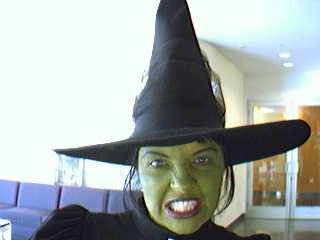
I never took it as an insult. I still don’t. I collect witches. For years I gleefully announced every Halloween that I wanted to be a witch, not because it was a costume, but because it was the most accurate description available. I have shown up to offices in full witch regalia, green face and all, and won the costume contest. Once, riding up in an elevator at work in complete witch costume, an employee stepped in, looked me up and down, and said “Oh Carmen. Scary as usual.” Then kept walking.
He wasn’t wrong. And he wasn’t surprised. That might be the greatest compliment I have ever received.
In my understanding, witches are wise women. Healers. Truth-tellers. Women who live at the edge of the village because the village isn’t quite ready for them, but comes to them anyway when it needs to see clearly. Plus, I like solitude and the forest.
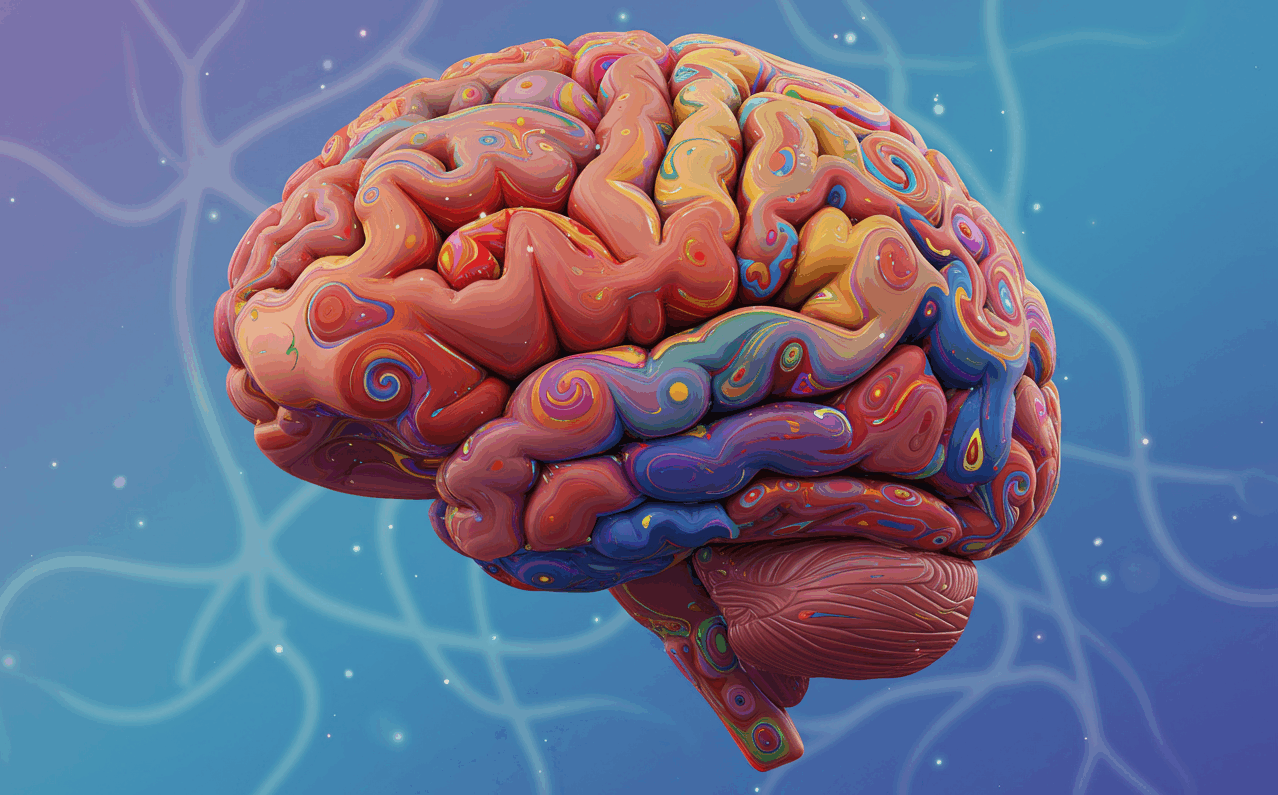
Here is the thing I need you to understand before you click away: none of this is magic. All of it is neuroscience. And once you understand what is actually happening, it stops being frightening and starts being one of the most fascinating things about how certain brains work.
The Terminator Scan
When I walk into a room, a conference, a party, a meeting, something happens that I can only describe as the Terminator vision. Little rectangles appear in my field of awareness, tagging scenarios and conversations. A checkmark for “nothing to see here.” A flag for “must investigate.” I am not consciously doing this. I am not looking for anything specific. My brain is simply running its standard environmental scan, the way it always has, and delivering outputs I can feel but rarely explain.
Sometimes the trigger is obvious in retrospect, a person bragging, body language in the people around them shifting before I’ve even heard the words, a laugh that is half a beat too loud. But sometimes I cannot identify the trigger at all. I only know that something is off. That the room has a wrong note in it. And I have to find it.
Almost 30 years ago I started calling this the Psychic Donut (don’t ask!), my internal detection voice that fires when something or someone doesn’t add up. It has a particular sensitivity for people who are overselling themselves, flat out lying, or carrying traits that most people find charming but I find immediately alarming: narcissism, psychopathy, the particular quality of someone who has decided that other people exist primarily for their use.
It is like how animals can spot the sick animal in a herd. Not through conscious analysis. Through something older and faster than thought.
The Banker Conference
Many years ago I attended a large conference in Washington DC. Important people. Expensive suits. Significant titles. I walked in, ran the scan, and felt immediately that the entire room was performing. Authentic signal: zero. I was bored before I’d taken off my coat.
But then I noticed the wait staff working quietly in the background.
I spent the entire conference sitting with them. I learned where they were from, how they had come to this work, what their lives looked like. Real conversations. Real people. I did not speak to a single “important” person the entire day.
This is not social anxiety. This is a precision instrument correctly identifying the difference between authentic signal and performed signal, and directing me toward the former. The suits were noise. The wait staff were signal.
This is also, incidentally, why sitting in the corner of parties watching is not antisocial behavior. It is data collection. The corner has the best view.
The Friend’s Boyfriend
This is the story that sounds most like magic. I want to tell it anyway, because I think it deserves to be told honestly.
A very long time ago, my best friend called to tell me she had met someone extraordinary. She wanted me to meet him immediately. A week or so later, she brought him over.
I had a terrible cold that day. I mention this because I was convinced it would make me completely unreliable, that my usual sense of things would be offline. I opened the door. I took one look at him.
What happened next is difficult to describe. It was like a film running in my head. I saw him hitting her. I saw violence in his future. I saw a black cloud around him that had nothing to do with anything he said or did in the doorway of my apartment. I knew, with a certainty I couldn’t justify, that this person was genuinely dangerous.
I said nothing. I was sick. I was probably wrong.
For the next few days I felt a deep sadness I couldn’t shake. I told my boyfriend and his friend that I was going to lose my best friend, because she would ask me what I had seen, and when I told her the truth, our friendship would be destroyed.
About a week later, she came back. She said: “I know you saw something. You owe me the truth.”
I told her to run. I told her he would hit her. I told her it would take three to four years to destroy her.
She called me arrogant. She said I thought I could predict the future. She left angry.
The next time I heard from her, she was stranded at a gas station in Hollywood. He had gotten drunk, hit her, and thrown her out of the car.
Over the following years, he broke her nose, destroyed her credit, got her thrown in jail, and threatened to kill her dogs. She spent three years in that relationship before she got out. She never fully recovered.
I could not explain how I knew. I still cannot fully explain it. What I know is that I knew, and that I was right, and that knowing and being right carried a cost I hadn’t anticipated.
What Is Actually Happening
Here is where the science comes in. Because this is not magic, and I am not a witch, and none of this is supernatural.
Autistic brains are pattern recognition engines. Enhanced visual and sensory processing means constantly scanning the environment for information, details, sequences, inconsistencies, at a speed and depth that neurotypical brains typically don’t match. The salience network in autistic brains flags things that are “off” – incongruent, unexpected, mismatched – and does so automatically, below the threshold of conscious awareness.
HSP brains add another layer: emotional frequencies. Not just behavioral incongruence, but felt incongruence. The sense of a black cloud, of wrongness, of danger, that is the HSP nervous system picking up emotional signals that haven’t yet surfaced in behavior.
And then there is the cold. My conscious filter, the part of my brain that edits, second-guesses, and tries to produce socially acceptable responses, was offline. The raw output came through unfiltered. That’s not a supernatural state. That’s what happens when the brain’s executive function is suppressed and the older, faster processing systems run without interference.
The Psychic Donut is not magic. It is pattern recognition operating below conscious awareness, trained across decades, delivering outputs that arrive as feelings, images, and certainties because that is faster than language.
It explains why colleagues used to ask me to do a “fly by on my broom” when interviewing candidates. One look. Checkmark or flag. I couldn’t always tell them why. I didn’t need to. The scanner had already processed more information than a structured interview would surface in an hour.
It also explains my career in fraud prevention. Twenty years of spotting patterns that don’t add up, behaviors that don’t match their context, people performing innocence while doing something else entirely. The Psychic Donut and the fraud brain are the same instrument. One operates in social environments. The other operates in data. The mechanism is identical.
What I Have Learned to Do With It
I don’t always say what I know. I have learned, slowly and at some cost, that arriving at a conclusion without a rational explanation attached is deeply unsettling to most people, and gets you labeled a liar. “I just know” is not a presentation format that corporate environments receive well.
So I have developed a practice. When the Donut fires, I watch. I wait. I gather the evidence that other people need in order to arrive at the same conclusion I reached the moment I walked into the room. And when it comes, and it usually comes, I am ready.
Sometimes I pretend to be fooled. If I don’t need to interact with someone I’ve flagged, it is often easier to let them believe their performance is working. I know exactly who they are. They don’t need to know that I know.
But when it matters, when someone I care about is at risk, or when an organization is about to make a costly mistake, I say what I see. Even when I can’t explain it. Even when I know the cost.
The little witch in the corner of the room, holding court while the peasants flock to her, has always known more than she let on.
She just had to wait for the world to catch up.